Flexographic printing is a high-speed relief printing process that transfers ink from a flexible photopolymer plate onto packaging materials like corrugated board, folding cartons, labels, and flexible film. It is the reason a shipping box, a snack carton, and a beverage label can each carry sharp, consistent brand graphics at a low cost per unit. For most packaging buyers, flexo is not a niche choice. It is the default, and it has been for decades.
This guide explains how the flexographic process actually works, how print quality and color are controlled, how flexo compares to digital, and how to judge a plate and print partner. The perspective here comes from a shop that has been making flexographic plates for corrugated converters and consumer brands since 1966.
Key Takeaways
- Flexographic printing uses a flexible relief plate and fast-drying ink to print packaging at high speed and low unit cost, which is why it dominates corrugated and label work.
- The global flexographic printing market was about USD 8.7 billion in 2023 and is forecast to reach USD 10.6 billion by 2028, a 4.1 percent annual growth rate.
- Post-print corrugated applications make up roughly 76 percent of the United States flexographic printing market, so plate quality matters most on rough board.
- Color consistency comes from press characterization and proofing, not luck. A characterized press plus an accurate proof is what keeps a brand color the same across runs.
- Flexo pairs well with recyclable corrugated. The 2024 United States cardboard recycling rate was 69 to 74 percent.
- Choose a partner on plate technology, color management, materials, and turnaround, not on price alone.
What is flexographic printing?
The global flexographic printing market was worth about USD 8.7 billion in 2023 and is on track to reach USD 10.6 billion by 2028, a compound annual growth rate of 4.1 percent, according to MarketsandMarkets. That scale exists because flexo solves a specific problem better than any other process: printing brand graphics on packaging substrates at very high volume.
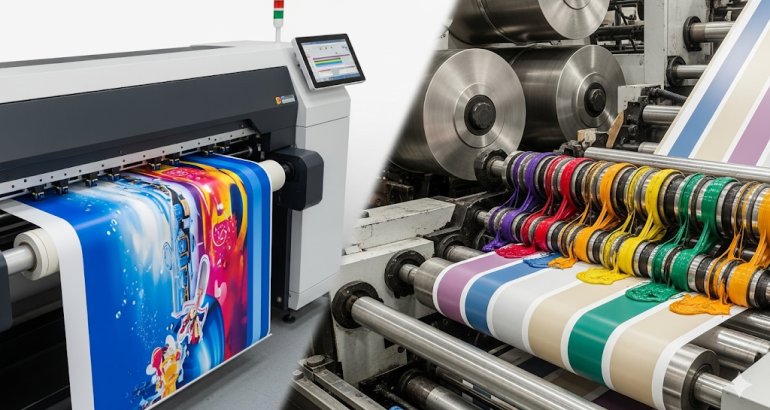
Flexography is a relief method. The image area on the plate sits raised above the non-image area, similar to a rubber stamp. A metering roll called an anilox picks up a controlled film of fast-drying ink, transfers it to the raised areas of a flexible photopolymer plate, and the plate presses that ink onto the material moving through the press. Because the plates flex, the process handles uneven and absorbent surfaces such as corrugated board and kraft paper that flat offset plates cannot manage well.
Flexo at a glance
Market size, application mix, and recovery
Where flexographic printing sits, and what happens to the board after.
MarketsandMarkets; American Forest and Paper Association.
Three properties make flexo the workhorse of packaging. It runs fast, it prints on almost anything a package is made from, and its per-unit cost drops sharply as volume rises. Flexo prints corrugated shipping boxes, retail-ready displays, folding cartons, paper sacks, labels, tags, and flexible film. VT Graphics focuses specifically on flexographic services for corrugated containers and point-of-sale displays, the segment where relief printing has the largest quality advantage.
How the flexographic printing process works
Modern flexo starts in prepress, where large-format digital plates carry the whole quality ceiling for the job. VT Graphics images optimized flat-top-dot digital plates at sizes up to 52 by 80 inches, in plate thicknesses from .045 to .250 inches to match different presses and boards. Flat-top dots hold their shape under press pressure, which produces broader tonal range, softer highlight transitions, and less visible fluting on corrugated.
A flexographic job moves through five stages:
- Prepress and art. Graphic artists prepare the file for the press, substrate, and ink set, adapting color and trapping for post-print flexo, preprint, or offset environments. This is where dot gain and fluting are planned for, not discovered on press.
- Plate making. The digital file is imaged onto a photopolymer plate. VT builds plates from photopolymers supplied by DuPont, MacDermid, and the Flint Group, then finishes them to the exact relief the press needs.
- Mounting. The finished plate is mounted to a cylinder in register so every color lands in the right place.
- Inking and printing. Each color station uses an anilox roll to lay down a metered ink film. The web of board or film runs through station after station at speed.
- Drying and finishing. Fast-drying inks set between stations, and the printed material moves to die-cutting, gluing, or converting.
The plate is the part buyers underrate. A plate that reproduces highlights cleanly and resists fluting is what separates a display that looks premium from one that looks flat, and it is decided long before the press runs.
Flexographic vs digital printing: when to use each
Post-print applications account for roughly 76 percent of the United States flexographic printing market in 2024, and that domestic market is projected to grow from about USD 2.92 billion in 2025 to USD 3.35 billion by 2030, per Mordor Intelligence. In plain terms, most packaging graphics in the country are still printed by flexo, and that is unlikely to change soon.
The real question is rarely flexo or digital in the abstract. It is where the crossover sits for a given job.
| Factor | Flexographic printing | Digital printing |
|---|---|---|
| Best run length | Medium to very high volume | Short runs, samples, versioning |
| Setup cost | Plates and mounting up front | Minimal setup |
| Cost per unit at scale | Very low | Higher, roughly flat |
| Turnaround for reorders | Fast once plates exist | Fast for one-offs |
| Substrate range | Corrugated, film, paper, board | Broad, varies by press |
| Color consistency across large runs | Excellent when characterized | Good, tighter on short runs |
Flexo wins when volume is high, the design is stable, and the same job will reorder. The plate cost is spread across thousands of impressions, so the unit price falls. Digital wins for short runs, quick samples, seasonal versions, and one-off displays where you do not want to pay for plates. Many brands use both, and mature shops route each job to the process that fits. VT Graphics also runs large-format digital printing on the same corrugated display work, which is why the flexo-or-digital decision can be made per job rather than per vendor.
Print quality and color consistency in flexographic printing
Color consistency in flexo is engineered, not hoped for. It rests on two things: a characterized press and an accurate proof. VT Graphics provides press characterization and print reproduction evaluation, using the data to set reproduction parameters for a given press, substrate, and ink set through its technical support and color management work. Characterize the press, and you know how each ink and dot will behave before the run starts.
Proofing closes the loop. In 2009, VT Graphics developed VT TruColor Dot Proof, a screened proofing process built on its knowledge of dot gain and press profiling, designed to match the printer’s press sheets as closely as present-day technology allows. A proof that predicts the press is what lets a brand sign off on color with confidence rather than crossing its fingers at the first press check.
Two prepress choices carry most of the quality. Flat-top-dot digital plates reproduce highlights and vignettes more cleanly and cut fluting on corrugated. Correct anilox and screening choices keep ink weight consistent station to station. Get the plate and the color management right, and a brand red stays the same red across a shipping box, a shelf tray, and a floor display printed months apart.
Sustainability, inks, and recyclability
Flexo lines up well with the packaging industry’s recyclability story. The 2024 United States cardboard recycling rate was 69 to 74 percent, and more than 33 million tons of cardboard were recycled, about 90,000 tons per day, according to the American Forest and Paper Association. That rate held close to the prior year’s 71 to 76 percent range, based on reporting from Packaging Dive. Corrugated remains one of the most recycled materials in the country, and flexo is the main way graphics get onto it.
Ink choice adds to the picture. Water-based and low-migration flexo inks reduce solvent use, and digital corrugated systems now run water-based inks that are odorless and free of hazardous labeling. Photopolymer plates and modern anilox metering also cut waste by laying down only the ink a job needs, which lowers both cost and overspray. For a brand trying to hit packaging sustainability targets, printing recyclable corrugated with lower-impact inks is a practical lever, not a marketing line.
None of this requires a trade-off with shelf appeal. The same plates that improve print quality also let brands use lighter boards and tighter ink sets, so a package can look premium and still recycle cleanly.
How to choose a flexographic printing partner
Founded in 1966 as a plate-making trade shop for corrugated converters, VT Graphics now serves Fortune 500 and top-name brands nationally and internationally from a 45,000-square-foot campus outside Philadelphia. That history is a useful reminder of what to check when you evaluate any flexographic printing partner. Judge the shop on capability, not just quote price.
Use this checklist:
- Plate technology. Ask about flat-top-dot digital plates, maximum plate size, and screening options. This sets the quality ceiling.
- Color management. Look for press characterization and a real proofing system that predicts the press, so brand colors stay consistent across runs and plants.
- Materials and range. Confirm the shop handles your substrates, from corrugated to film, and can support both product packaging and display work.
- Both processes under one roof. A partner that runs flexo and digital can route each job to the right process instead of forcing a fit.
- Turnaround and project management. Fast, reliable plates and clear liaisons keep reorders and rush jobs on schedule.
- Track record. Ask for real brand work in your category, on the boards and presses you actually use.
The goal is a partner who treats the plate and the color data as the product, because that is what shows up on the shelf. Get those right, and flexographic printing delivers consistent, on-brand packaging at a cost per unit no short-run process can match.
Frequently Asked Questions
What is flexographic printing used for?
Flexographic printing is used mostly for packaging: corrugated shipping boxes, retail-ready and point-of-sale displays, folding cartons, labels and tags, paper sacks, and flexible film. It is the dominant process for corrugated because relief plates handle rough, absorbent board well at high speed.
How is flexographic printing different from digital printing?
Flexo uses a physical photopolymer plate and fast-drying ink, so it has an up-front plate cost but a very low cost per unit at volume. Digital printing has little setup and suits short runs, samples, and versioned jobs, but its unit cost stays higher and roughly flat. Flexo wins on high, repeating volumes; digital wins on short, variable ones.
What materials can flexographic printing be applied to?
Flexo prints on corrugated board, kraft and other papers, folding carton stock, labels, and flexible plastic films. Because the plate flexes, the process manages uneven and absorbent surfaces that flat printing methods struggle with.
Is flexographic printing good for short runs?
Not usually. The plate and mounting cost has to be spread across the run, so very short jobs often print more economically on digital. For medium to high volumes, and for any design that will reorder, flexo is typically the lower-cost choice.
What determines flexographic print quality?
Two prepress factors carry most of the quality: the plate and the color management. Flat-top-dot digital plates reproduce highlights and reduce fluting on corrugated, and a characterized press plus an accurate proof keeps color consistent from run to run.
Ready to spec a flexographic project? VT Graphics builds plates and manages color for corrugated packaging and displays across the United States. Call (610) 259-4090 or request a quote to talk through your job.