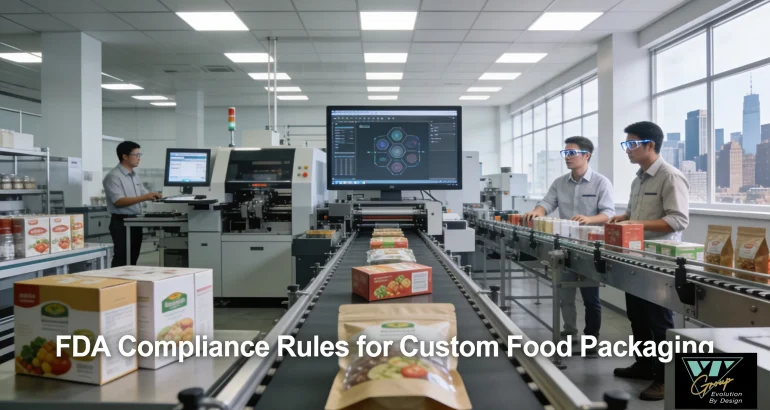
FDA compliance rules for direct contact custom printed food packaging require verifying that all materials — including inks, adhesives. Colorants — meet regulations for indirect food additives, since these substances are classified as food contact substances under federal law. Packaging manufacturers bear direct regulatory responsibility for ensuring every component complies with FDA safety standards.
FDA compliance for direct contact custom printed food packaging requires verifying that all inks, adhesives. Colorants meet applicable regulations governing food contact substances. These substances qualify as indirect food additives under federal guidelines. Our flexographic pre-press, plate-making, and precision finishing capabilities are engineered to meet these rigorous material and safety standards consistently.
Key Takeaways
- FDA classifies food contact substances into 3 categories: packaging, processing equipment, and preparation surfaces.
- Packaging materials require FDA approval before manufacturers use them in direct food contact applications.
- Food Contact Substance Notifications (FCNs) take 120 days for FDA to review and authorize.
- VT Group LLC in Lansdowne, PA produces custom printed packaging compliant with FDA food contact regulations.
What prerequisites must brands understand before starting?
Custom printed food packaging must simultaneously satisfy consumer appeal, preserve food quality over time, and maintain food safety — brands that overlook any one of these roles risk product recalls, regulatory penalties, and lost shelf placement. Packaging decisions are never purely aesthetic; every material, ink, and adhesive that contacts food carries regulatory weight.
What qualifies as a food contact substance?
A food contact substance is any substance that contacts food without being intended to produce a technical effect in that food. The definition extends beyond the outer package itself to include components, adhesives, colorants, and coatings applied to packaging surfaces. Brands must audit every layer of their packaging structure before production begins.
Why do materials and inks require safety evaluation before production?
Food safe printing materials and FDA approved packaging inks demand evaluation because the average consumer never considers what lies beneath a label — but materials suppliers and packaging manufacturers carry full responsibility for that safety determination. Choosing materials based on visual appeal alone exposes brands to compliance failures that disrupt supply chains and damage consumer trust.
Before engaging a pre-press and plate manufacturing partner, brands should confirm the following prerequisites are addressed:
- Identify every component that physically contacts food or beverage contents.
- Verify that all inks, coatings, and adhesives meet applicable FDA food contact regulations.
- Document the intended use conditions — temperature, moisture exposure, and contact duration — for each packaging format.
- Confirm material suppliers have provided compliant safety data for every substrate.
At VT Group LLC in Lansdowne, PA, our flexographic pre-press. Plate manufacturing expertise helps multinational brands navigate these requirements with precision and efficiency.
How do FDA food contact substance regulations actually work?
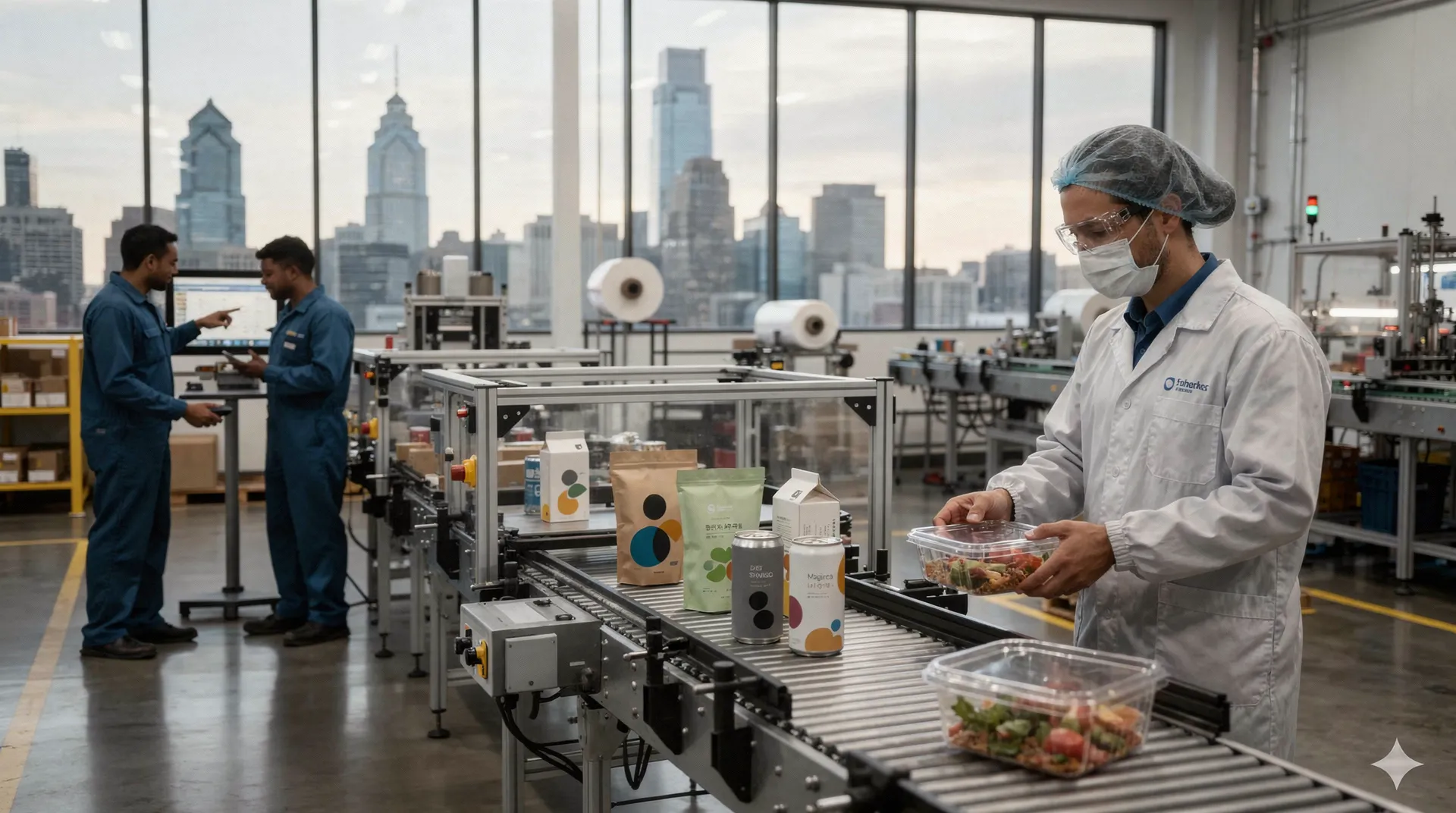
FDA food contact substance regulations exist because chemicals from packaging transfer into food. Making material selection a legal and safety obligation, not just a design choice. Packaging manufacturers producing custom printed food packaging must understand this regulatory framework or risk non-compliance that pulls products from shelves entirely.
Food contact substances — a category that includes packaging components, processing equipment, food preparation surfaces, and cookware — are regulated as indirect food additives under federal law. Substances added to or applied on packaging surfaces, such as adhesives, colorants, antimicrobials, and antioxidants, all fall within this definition. The potential for chemical migration from packaging into food is precisely why these regulations exist.
What substances are actually covered under FDA food contact rules?
The FDA’s scope extends beyond the packaging structure itself. Food safe printing materials — including colorants and adhesives applied directly to packaging surfaces. Are classified as food contact substances and subject to indirect food additive requirements. Failing to verify compliance for each material layer exposes manufacturers to significant regulatory liability.
Why does understanding FDA legislation matter for packaging manufacturers?
Understanding FDA legislation is the foundation of creating packaging that is effective, safe, and legally compliant. Without that foundation, brands lose market access, face costly reformulations, and damage consumer trust. We integrate regulatory awareness into every stage of our pre-press and plate-making process to eliminate compliance gaps before production begins.
Follow these steps to navigate FDA food contact substance compliance:
- Identify every material that contacts food directly or indirectly, including inks and coatings.
- Verify FDA status for each substance — confirm indirect food additive clearance or applicable exemption.
- Audit adhesives and colorants separately, as FDA approved packaging inks and adhesives carry distinct compliance burdens.
- Document material specifications throughout the supply chain to support regulatory review.
How should brands evaluate food safe printing materials?
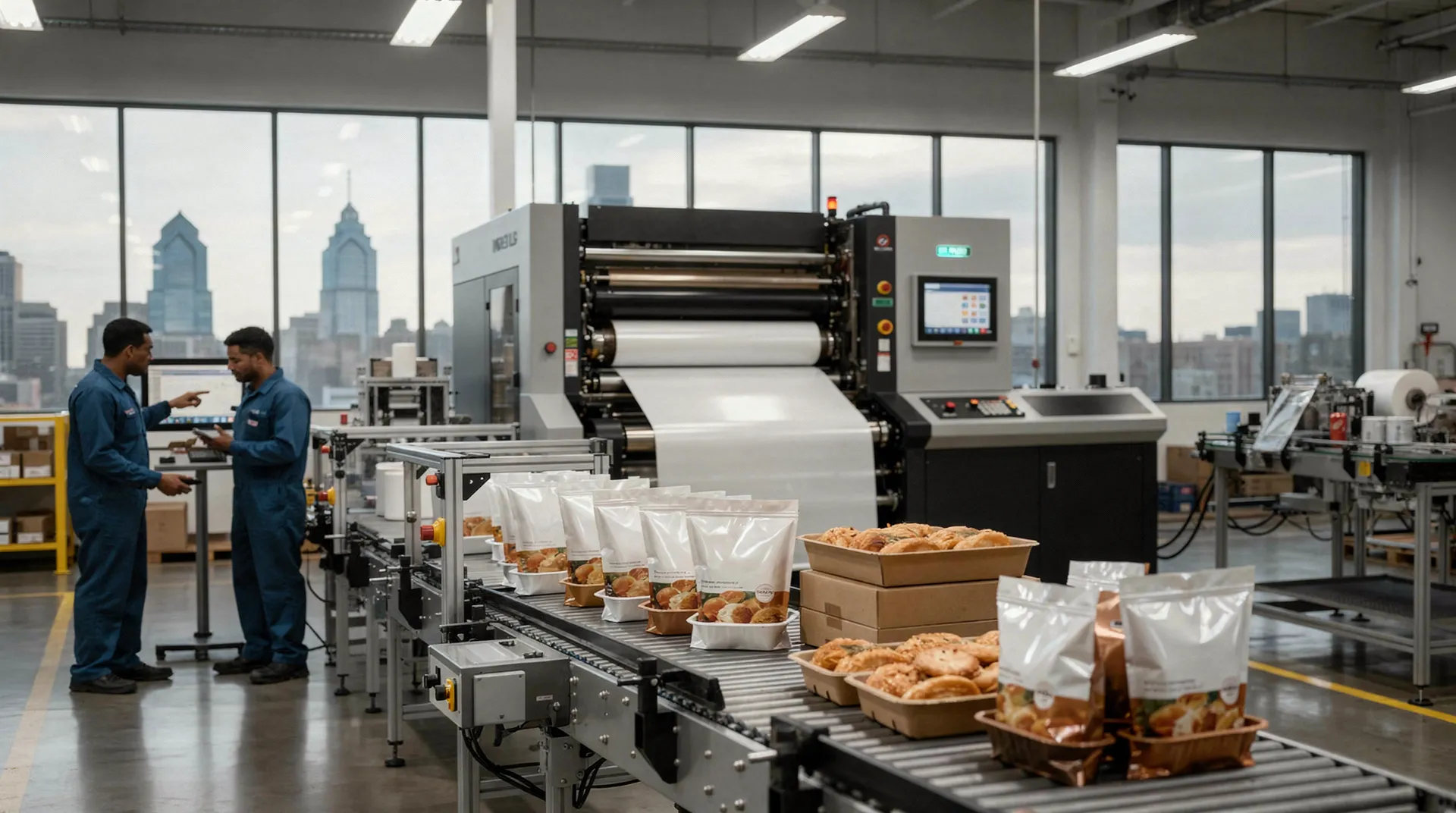
Brands evaluate food safe printing materials by assessing substrate compatibility, coating performance. Regulatory compliance before committing to a production run. Skipping this evaluation exposes brands to compromised shelf life, failed audits, and costly recalls.
Food is routinely presented to consumers in coated paper, paperboard, or cardboard packaging. Specially engineered coatings on these substrates deliver moisture, liquid. Grease resistance while actively preserving the quality of the food sealed inside. Beyond aesthetics, plastics, paper, and other packaging materials contribute measurable supply-chain benefits. Including sterility and prolonged shelf life — that brands cannot afford to sacrifice through poor material selection.
What role do coatings play in food packaging performance?
Coatings transform standard paperboard into a functional barrier. Specially engineered coatings improve shelf life and protect food quality by resisting moisture, liquid, and grease migration. Selecting the wrong coating — or omitting one entirely — directly shortens product viability on shelf.
How do FDA approved packaging inks factor into material evaluation?
FDA approved packaging inks must be assessed alongside substrate and coating choices, because ink components qualify as food contact substances under federal guidelines. Brands producing custom printed food packaging need to confirm that every ink, adhesive, and coating layer meets applicable compliance standards before press approval. Our flexographic pre-press and plate manufacturing capabilities are built to support this evaluation process from the start.
Follow these steps to structure a rigorous material evaluation:
- Identify substrate requirements — determine whether paper, paperboard, or another material suits the product’s moisture and grease exposure.
- Audit coating performance — verify that engineered coatings deliver the required barrier properties for the intended shelf life.
- Confirm ink compliance — validate that all inks meet food contact substance regulations before finalizing press specifications.
- Engage a single-source partner — consolidate pre-press, plate making, and color management under one provider to eliminate compliance gaps between vendors.
How do FDA approved packaging inks and adhesives get verified?
FDA approved packaging inks and adhesives earn verified status through a structured compliance process that places significant regulatory responsibility on packaging manufacturers — not solely on ink or adhesive suppliers. Skipping or shortcutting this verification process exposes brands, converters, and CPCs to serious liability, including product recalls and regulatory action.
FDA defines a food additive as any substance whose intended use results. Or may reasonably be expected to result — in its becoming a component of food, or affecting food characteristics. That definition directly governs how inks and adhesives used in custom printed food packaging are evaluated and approved. It underscores why verifying that all food safe printing materials meet applicable requirements is a non-negotiable step in the production process.
What makes adhesive compliance different from other food contact substances?
FDA regulation of adhesives in food packaging differs from how the agency regulates other food contact substances. For most food contact substances, regulatory focus falls on the substance itself. For adhesives, the compliance burden shifts substantially onto the manufacturers of the finished food packaging and the food product. Meaning converters and brands carry direct accountability.
What steps does the verification process follow?
Complete adhesive and ink verification requires a disciplined, sequential approach:
- Classify the substance — Determine whether the ink or adhesive qualifies as a food contact substance or indirect food additive under FDA definitions.
- Assess migration potential — Evaluate whether the substance may reasonably migrate into food under intended use conditions.
- Confirm regulatory authorization — Verify the substance is covered by an existing FDA regulation, food contact notification, or GRAS determination.
- Document manufacturer compliance — Ensure the packaging manufacturer maintains records demonstrating adherence to all applicable requirements.
We integrate full workflow management, color-matching. Technical support into every project, helping clients navigate these verification requirements with precision and confidence.
What common compliance mistakes should packaging teams avoid?
Packaging teams most often lose compliance standing by overlooking the functional role of food safe printing materials. The substances applied to packaging surfaces. Gaps in visibility, consistency, and control compound those errors as packaging complexity increases and brand expectations rise.
Why do food contact substances matter beyond basic labeling?
Custom printed food packaging carries more regulatory weight than most teams anticipate. Food contact substances — including adhesives, colorants, and surface coatings — serve active functional roles: preventing grease from migrating through paper or cardboard, and preventing discoloration from repeated use of plastic containers. Treating these substances as purely aesthetic elements is a critical compliance error that exposes brands to regulatory risk.
What steps should packaging teams follow to close compliance gaps?
Prerequisites: Confirm that all substrate and ink specifications are documented before beginning production.
- Audit every food contact substance applied to packaging surfaces, including adhesives and colorants, against current FDA requirements.
- Verify that FDA approved packaging inks are specified at the design stage — not retrofitted after press characterization begins.
- Establish a centralized asset management framework that delivers visibility across all packaging versions and production runs.
- Document press characterization data and color management profiles so compliance evidence is traceable and audit-ready.
- Engage a single-source production partner with demonstrated expertise — VT Group brings over five decades of experience serving Fortune 500 companies and major brands — to eliminate handoff errors between design, pre-press, and print production.
Navigating FDA compliance for direct-contact custom printed food packaging demands rigorous attention to material selection, ink formulation. Documentation — each element reinforcing the integrity of the finished product and the safety of the end consumer. Brands and converters that treat regulatory alignment as a foundational discipline, rather than a final checkpoint, position themselves for consistent quality outcomes. Reduced risk across every production run. Partnering with an experienced, single-source packaging manufacturer transforms that compliance complexity into a structured, repeatable process.
FAQ
What qualifies as a food contact substance?
Any substance that contacts food without being intended to produce a technical effect in that food, including components, adhesives, colorants. Coatings applied to packaging surfaces.
How long does FDA take to review a Food Contact Substance Notification?
FDA takes 120 days to review. Authorize a Food Contact Substance Notification (FCN) before manufacturers receive approval to use the material in direct food contact applications.
Which materials require FDA approval in custom printed food packaging?
All materials that directly contact food — including inks, adhesives, and colorants. Require FDA approval, as federal guidelines classify these substances as indirect food additives.