Environmental graphics are the visual systems that turn a physical space into a branded experience. They include the signage, wall graphics, wayfinding, and installations that tell people where they are, who they are with, and why the space matters. For brands, retailers, and property owners, environmental graphics are one of the few marketing investments that work around the clock, in the real world, on every person who walks through the door.
This guide explains what environmental graphics are, why they move real buying behavior, the core formats you can use, and how to plan a program that stays consistent from the lobby to the shelf.
Key Takeaways
- Environmental graphics combine graphic design, architecture, and wayfinding to connect people to a place, a practice the Society for Experiential Graphic Design (SEGD) organizes across seven disciplines.
- Signage shapes real buying behavior. A FedEx Office survey found that 76 percent of consumers have entered a store they never visited before because of its signs.
- Consistent visual branding across every space can raise revenue by up to 33 percent, based on the Lucidpress State of Brand Consistency report.
- The core formats are wayfinding, placemaking, branded environments, retail and point-of-purchase graphics, and exhibits.
- A strong program starts with strategy and a space audit, then moves through design, material selection, large-format production, and installation.
What Are Environmental Graphics?
The Society for Experiential Graphic Design (SEGD) describes its field as designers of experiences who connect people to place, a discipline practiced by more than 2,200 members across 36 countries and more than 50 years of work (SEGD). Environmental graphics, also called experiential graphic design, merge graphic design, architecture, and wayfinding to make the built environment easier to read and more engaging to move through.
In plain terms, an environmental graphic is any designed element applied to a physical space to communicate. That covers exterior signs and storefront graphics, interior wall murals and window graphics, floor and ceiling graphics, backlit signage, wayfinding systems, and full branded environments for showrooms, events, and retail floors. The goal is not decoration for its own sake. The goal is to help a visitor understand a place quickly and feel the brand while they do it.
VT Group has built this kind of work into a full service line through its interior and exterior signage and displays offering, which spans point-of-purchase displays, aisle signage, window and floor graphics, backlit signs, wall murals, and large-format banners.
Why Environmental Graphics Influence Buying Decisions
Signage changes what people do, not only what they think. In the FedEx Office “What’s Your Sign?” survey, 76 percent of American consumers said they entered a store they had never visited before because of its signs (FedEx Office). That is a large share of first-time traffic driven by a single visual touchpoint.
The reason is simple. A person moving through a street, a mall, a lobby, or a trade show floor makes fast judgments about where to go and what to trust. Environmental graphics are the first signal they read. Good graphics pull attention, set expectations, and reduce the friction of figuring out a space. Weak graphics do the opposite, and the traffic that a brand paid to attract walks past.
Consumer response
How signage moves buying decisions
Share of US consumers reporting each signage-driven behaviour.
FedEx Office “What’s Your Sign?” survey of 1,000 US adults, as cited in the post.
Because environmental graphics live in the real world, they also reach an audience that no ad platform can target directly. Anyone in the space sees them, whether they searched for the brand or not. For companies that serve customers nationally, that reach is a reason to treat physical graphics as a core channel and not an afterthought. VT Group applies this thinking across the industries it serves, from retail and consumer goods to food and beverage brands, detailed on its who we serve page.
The Main Types of Environmental Graphics
SEGD groups the practice into seven disciplines: wayfinding, placemaking, branded environments, exhibition design, digital experiences, public installation, and strategy, research, and planning (SEGD). For most brands and retailers, the work falls into five practical buckets.
- Wayfinding. Signs and cues that guide people through a building or campus, from directional signage to room identification and code-required markers.
- Placemaking. Graphics that give a space its identity and mood, such as feature walls, murals, and oversized typography that make a location memorable.
- Branded environments. Full spaces designed to express a brand, including showrooms, pop-ups, lobbies, and retail interiors where every surface carries the message.
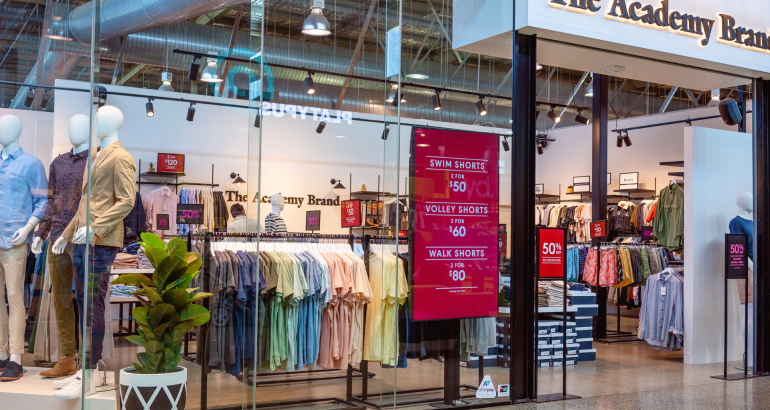
- Retail and point-of-purchase graphics. In-store displays, aisle signage, end caps, window graphics, and floor graphics that direct shoppers toward a product at the moment of decision.
- Exhibits and events. Trade show booths, regional event spaces, and temporary installations that need to look complete and travel well.
VT Group covers the branded environment side through Ocean Design Group, which turns client concepts into packaging design, branded environments, and regional events with structural 3D design born from an at-shelf strategy. You can see that work on the Ocean Design Group page, and the retail display side through its corrugated displays capabilities.
How Environmental Graphics Work in Retail and at the Shelf
More than two thirds (68 percent) of consumers believe a store’s signage reflects the quality of its products or services, the same FedEx Office survey found (FedEx Office). At the shelf, that perception becomes a sales lever, because the graphics around a product quietly rate the product itself.
Retail environmental graphics work by controlling attention in a crowded space. Power wings, end caps, aisle violators, dump bins, and window graphics interrupt the shopper’s path and pull the eye toward a specific item. Floor graphics and counter displays reinforce the message at the last few feet before a purchase. Done well, the display and the package speak with one voice, so the shopper sees a single, confident brand rather than a stack of mismatched pieces.
This is where design and production have to connect. Ocean Design Group develops the at-shelf concept and structure, and the VT Group companies print and build it, which keeps the creative intent intact from sketch to store. Brands can extend the same visual system onto the product itself through VT Group’s product packaging work, so the display, the box, and the graphics all match.
Brand Consistency Across Every Space
Consistent branding pays. The Lucidpress State of Brand Consistency report, based on a survey of more than 200 organizations, found that presenting a brand consistently can increase revenue by up to 33 percent, while 81 percent of companies still deal with off-brand content (PR Newswire). Environmental graphics are one of the easiest places for that consistency to break, because the work is spread across many surfaces, vendors, and locations.
A shopper who sees one color palette on a website, a second on the storefront, and a third on the in-store display does not read three campaigns. They read one brand that looks unsure of itself. A single visual system, applied from the exterior sign to the lobby to the shelf to the packaging, tells the opposite story. It signals a brand that has its act together, and that signal carries weight at the moment someone decides whether to trust a product.
The practical fix is to design the graphics program as a system, with defined colors, type, materials, and spacing rules that every location follows. Sourcing the design and the production from one partner makes that far easier to hold, because the same team controls color and quality across every format.
Materials, Substrates, and Large-Format Production
Quality of execution matters as much as the idea. Over half (52 percent) of consumers say they are less willing to enter a store with misspelled or poorly made signs, according to the FedEx Office survey (FedEx Office). A strong concept printed on the wrong material or with weak color control loses the trust it was meant to build.
Environmental graphics run across a wide range of substrates and finishes, and each application has its own demands. Interior wall graphics and window films need clean edges and color that holds under store lighting. Exterior signage, storefront graphics, and construction wraps need materials that survive weather and sun. Backlit signage needs films tuned for even light. Floor graphics need slip-rated laminates rated for foot traffic. Choosing the right combination is a production decision that protects the design.
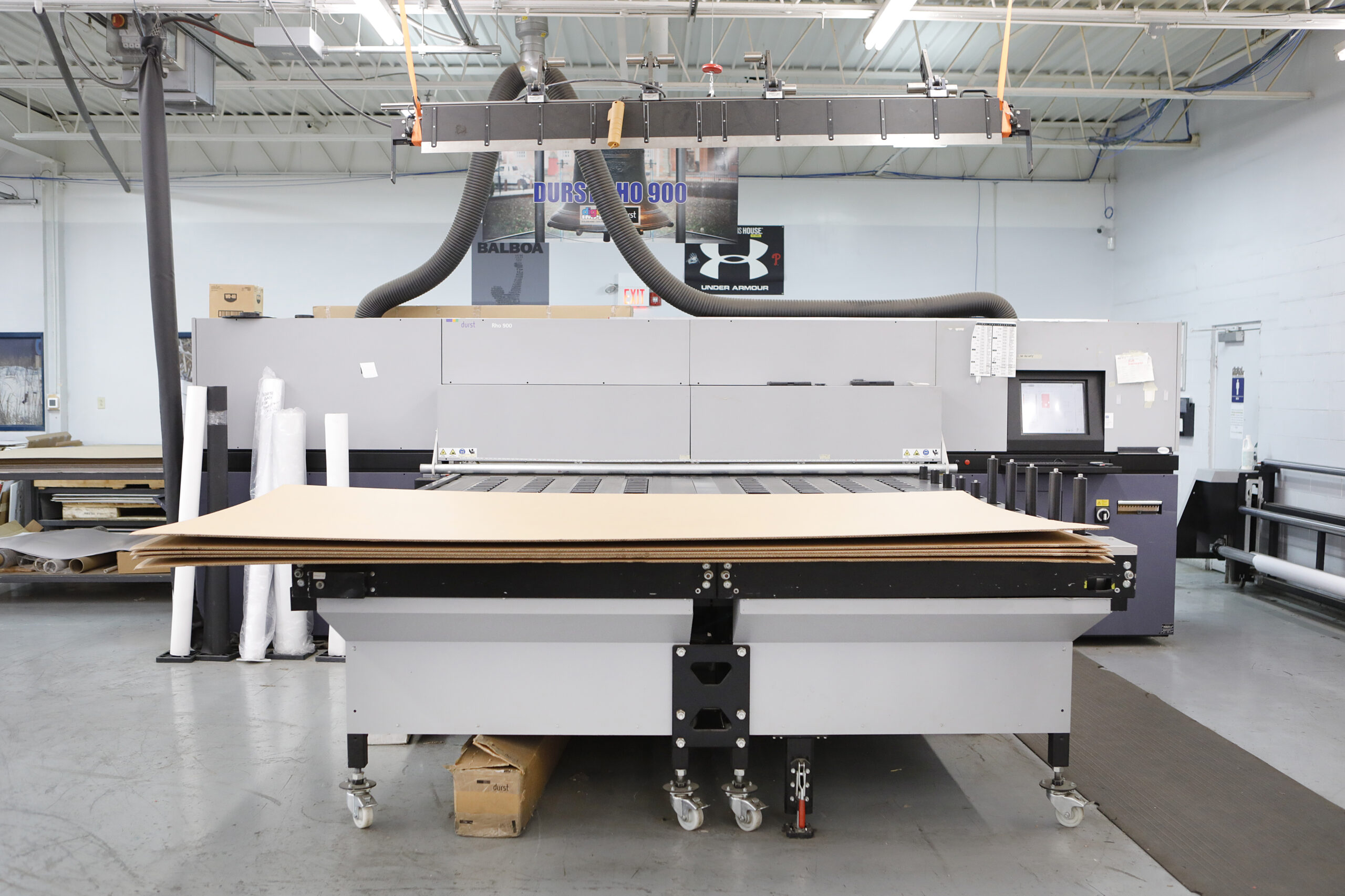
VT Group brings this in house with large-format printing presses, in-house digital merchandising experts, and print management specialists, backed by the color management discipline that keeps a brand’s exact colors consistent from one run to the next. That production capability, described across its state-of-the-art equipment page, is what lets a design survive the jump from screen to finished graphic.
How to Plan an Environmental Graphics Program
Nearly 60 percent of consumers say the absence of a sign deters them from entering a store, the FedEx Office survey reported (FedEx Office). That is why a program should start with the gaps in a space, not with the decoration. A useful sequence looks like this.
- Strategy and audit. Walk the space as a visitor would. Note where people get lost, where the brand disappears, and where a graphic could change a decision.
- Message and wayfinding hierarchy. Decide what each zone needs to say and in what order, so the most important message is the most visible.
- Design. Develop the visual system, the layouts, and any 3D structures, keeping the brand’s colors and type consistent across every format.
- Materials and specification. Match each graphic to the right substrate, finish, and mounting method for its location and lifespan.
- Production. Print and build with color control and quality checks, so every piece matches the approved design.
- Installation and measurement. Install cleanly, then track the result, whether that is store traffic, event engagement, or sell-through.
VT Group, founded in 1966 and now a collective of four companies on a 45,000-square-foot campus near Philadelphia, is built to run all of these steps under one roof for brands across the country. That single-source structure removes the handoffs between designer, printer, and builder that usually cause color drift and delays.
Frequently Asked Questions
What is the difference between environmental graphics and signage?
Signage is one part of environmental graphics. A sign identifies or directs. Environmental graphics is the broader practice of using graphics, wayfinding, and branded surfaces to shape the whole experience of a space, which includes signage along with murals, window and floor graphics, retail displays, and full branded environments.
Are environmental graphics only for large buildings?
No. Environmental graphics scale to the space. A single retail location, a trade show booth, a lobby, or a pop-up shop can all benefit. The same design principles apply whether the canvas is one storefront window or an entire campus.
How do environmental graphics support wayfinding?
Wayfinding is one of the seven disciplines SEGD names in the field. Environmental graphics support it with directional signs, room and zone identification, color coding, and floor or wall cues that help a visitor move through a space without confusion, which reduces frustration and keeps attention on the brand.
What materials are used for environmental graphics?
Common materials include vinyl films for walls and windows, rigid substrates for signs and displays, backlit films for illuminated signage, slip-rated laminates for floor graphics, and durable outdoor media for exterior signage and wraps. The right choice depends on the location, the lighting, and how long the graphic needs to last.
How do you measure the return on environmental graphics?
Tie the graphics to a business metric before you install them. Retail programs can track store traffic and sell-through on the featured product. Branded environments and events can track engagement and dwell time. Wayfinding can track fewer support questions and smoother movement. Consistent measurement turns the program into a channel you can improve over time.
Sources
- Society for Experiential Graphic Design, About SEGD. https://segd.org/about/
- FedEx Office, “What’s Your Sign?” survey, conducted by Ketchum Global Research and Analytics with ORC International. https://newsroom.fedex.com/newsroom/global-english/fedex-office-survey-standout-signs-contribute-to-sales
- Lucidpress, State of Brand Consistency report, via PR Newswire. https://www.prnewswire.com/news-releases/study-finds-companies-with-consistent-branding-can-see-up-to-33-increase-in-revenue-300967219.html
Written by the VT Group Team. VT Group is a suite of four companies specializing in packaging design, print solutions, and interior design, serving brands across the United States from its campus near Philadelphia. To see how environmental graphics could work for your brand, request a free sample kit or contact the team.