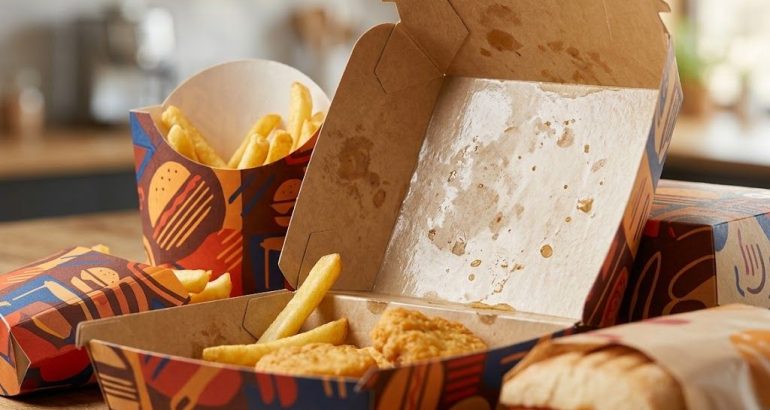
Grease barriers no longer require PFAS: following the FDA’s February 2024 phase-out announcement, manufacturers now produce PFAS-free greaseproof papers using alternative coatings that resist grease and moisture without fluorochemicals, meeting current regulatory and safety standards for food packaging.
Custom printed food packaging grease barriers do not need PFAS to perform. Since February 2024, the FDA has phased out PFAS use in food packaging, pushing the industry toward fluorochemical-free alternatives. We supply PFAS-free greaseproof papers that block grease and moisture while meeting current regulatory standards for brands, bakeries, and restaurant operators nationwide.
What Is PFAS And Why Does It Matter?
Per- and polyfluoroalkyl substances, known as PFAS, are synthetic chemicals once prized for their resistance to water, grease, and heat. Food packaging manufacturers relied on these compounds for decades to keep sauces from soaking through boxes and grease from bleeding onto shelves. That resistance came at a cost. PFAS persists in the environment and in the human body, earning the nickname “forever chemicals.”
Regulators have taken notice. In February 2024, the FDA announced significant restrictions on PFAS use in food packaging, marking a major turning point for the industry. Brands sourcing custom printed food packaging now face a narrowing window to transition away from legacy materials before compliance deadlines tighten further.
Why did PFAS become the default choice for grease-resistant packaging?
Manufacturers turned to PFAS because nothing else matched the performance at the time. The chemicals created a barrier that blocked oil, water, and heat without adding bulk or weight to paperboard. That functionality made PFAS the standard for decades, even as evidence of environmental persistence accumulated.
What changed to force the industry’s hand?
Growing health and environmental research shifted the calculus for regulators and buyers alike. We have watched this regulatory pressure build for years, drawing on our long-standing position as a packaging partner to Fortune 500 companies. Our long history producing compliant materials gives us direct insight into how these standards evolve. What buyers need to do next.
Do Custom Printed Grease Barriers Contain PFAS?
VT Group’s grease barriers carry no PFAS. Our Digital Impact division prints food packaging using water-based, odorless inks in place of PFAS-based coatings, and every run holds to current regulatory standards. Brands lose shelf trust fast when packaging fails a compliance check, and we build our process to avoid that risk entirely.
International regulators have moved decisively against PFAS and related compounds in recent years. Packaging converters across the industry have shifted their formulations in response. We designed our production line around that reality rather than reacting to it after the fact. Food brand owners and commercial bakeries working with us get custom printed food packaging built for the compliance environment they operate in today, not the one from a decade ago.
What Makes a Grease Barrier Compliant?
A compliant barrier resists oil and moisture without relying on fluorinated chemicals. We source PFAS-free food safe packaging materials. Pair them with grease resistant paperboard coatings engineered to hold up under real kitchen and bakery conditions. Compliance and performance aren’t separate goals in our process — they’re the same requirement.
Why Choose a Full-Service Packaging Partner?
Sourcing compliant materials from one vendor and printing from another multiplies risk and slows timelines. As a full-service supplier to the packaging and design industries, we control both sides under one roof.
Our Pennsylvania-based custom packaging work is tailored to the specific needs of each business we serve, including:
- Bakery and restaurant takeout containers
- Retail food packaging requiring shelf-ready graphics
- Grease-resistant wraps and liners for prepared foods
Businesses gain a single point of accountability for compliance, print quality, and delivery — instead of chasing answers across multiple suppliers.
How Do Grease-Resistant Paperboard Coatings Work Without PFAS?
Modern grease resistant paperboard coatings reduce the porosity of the paper fiber itself, closing the microscopic gaps that oil normally seeps through. The result is a smooth, dense surface that blocks grease and moisture on contact. Food stays crisp and appetizing instead of turning soggy inside the wrapper or box. We build our coating processes around this same principle, engineering barrier performance without a single fluorochemical in the formulation.
What Makes Coated Paperboard Grease-Resistant Without PFAS Chemicals?
Barrier performance comes from physical structure, not chemical repellency alone. By tightening fiber density and refining surface texture during manufacturing, we create a substrate that naturally sheds oil rather than absorbing it. This approach delivers PFAS-free food safe packaging that performs under real kitchen and delivery conditions.
How Does VT Group Apply These Coatings at Scale?
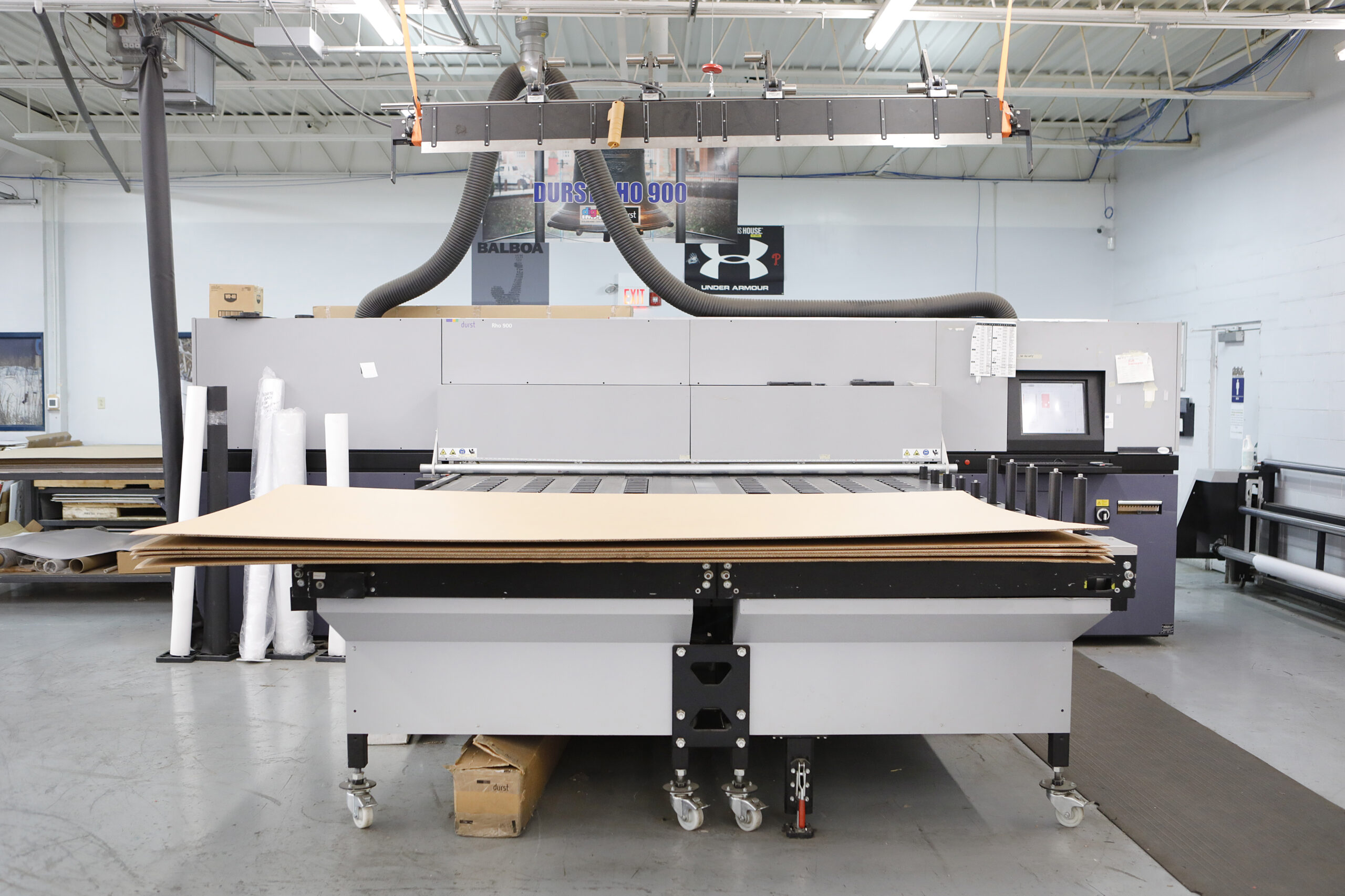
Consistency matters as much as the coating formula itself. Our flexographic plate making capabilities let us apply grease-resistant treatments with precision across long, high-volume print runs, so every carton in a batch performs identically. We pair that precision with water-based, odorless inks, avoiding PFAS chemistry throughout the entire production process, not just the substrate.
The combined result is custom printed food packaging that:
- Resists grease and moisture without synthetic fluorochemicals
- Prints cleanly and consistently across large production volumes
- Meets food-safety expectations while supporting shelf appeal
We treat coating chemistry, printing method, and plate precision as one integrated system. Grease resistance breaks down when any single component lags behind the others.
What Regulations Should Packaging Buyers Track?
Federal action against forever chemicals now defines the compliance landscape for food brand owners. The FDA’s February 2024 announcement marks a pivotal moment for the industry, forcing manufacturers to find alternatives that perform as well as older materials without the same health and environmental risks. We track these shifts closely because they reshape what counts as compliant custom printed food packaging for our clients.
The regulatory burden falls unevenly across the supply chain. Manufacturers and distributors face a significant compliance challenge that touches production choices, raw materials, and long-term sourcing strategy. Buyers carry a parallel responsibility: understanding what PFAS actually are, and knowing how to remove them from purchasing decisions altogether.
What should food brands ask suppliers about PFAS compliance?
We recommend brands confirm three things before signing a packaging contract:
- Whether the supplier can document PFAS-free food safe packaging across every SKU, not just flagship products.
- How the supplier verifies grease resistant paperboard coatings meet current federal standards.
- Whether compliance records get updated as regulations evolve, or only at initial certification.
How does asset management help with regulatory tracking?
Compliance tracking works best when built into a broader system, not handled project by project. Our packaging asset management framework brings structure and accountability to this process, applying the same discipline across corrugated displays, product boxes, and specialty packaging for food and other regulated industries. That structure gives buyers a single point of accountability instead of scattered certificates.
Regulatory change will continue. Brands that build compliance tracking into their sourcing relationships now avoid costly reformulation later, when deadlines tighten and alternatives grow scarce.
How Can Brands Source Compliant Custom Printed Packaging?
Sourcing starts with a single-source manufacturing partner rather than a patchwork of vendors. Food brands lose time, money, and quality control when workflow, pre-press, printing, and die cutting live under separate roofs. We operate as a full-service suite serving the packaging and design industries, giving food brands, restaurant operators, and commercial bakeries one point of accountability for custom printed food packaging from concept through finished carton.
That structure matters because compliance decisions touch every stage of production. A pre-press error, a coating mismatch, or a disconnected printing process can undo a brand’s food-safety commitments before the product ever reaches a shelf.
What Should Buyers Look for in a Packaging Partner?
Buyers should look for a partner that manages the full production chain, not isolated pieces of it. We combine workflow management, pre-press, large format digital printing, and die cutting into one coordinated process, which reduces handoff errors and keeps compliance standards consistent from design through delivery.
Does Design Capability Matter for Food Packaging Compliance?
Design and compliance are not separate concerns; they work together. Our Digital Impact division builds displays. Packaging engineered to capture attention in retail settings, helping beverage and food products stand out on crowded shelves while still meeting food-safety expectations. Packaging that looks distinctive but ignores material standards creates liability, not brand value.
Beyond materials and design, sourcing decisions should account for long-term oversight. Packaging asset management brings structure, accountability, and measurable performance tracking to packaging systems, which gives brands real control over cost, quality, and compliance as they shift toward PFAS-free food safe packaging and away from legacy chemical treatments. For buyers evaluating grease resistant paperboard coatings, that level of oversight separates a reliable partner from a transactional vendor.
Frequently Asked Questions
Do custom printed food packaging grease barriers contain PFAS?
No. VT Group’s grease barriers carry no PFAS. The Digital Impact division prints food packaging using water-based, odorless inks in place of PFAS-based coatings, meeting current regulatory standards.
Why were PFAS used in food packaging in the first place?
PFAS created a barrier that blocked oil, water, and heat without adding bulk or weight to paperboard, making them the industry standard for decades despite evidence of environmental persistence.
Are PFAS-free greaseproof papers still effective at blocking grease?
Yes. PFAS-free greaseproof papers use alternative coatings that resist grease. Moisture without fluorochemicals, meeting current regulatory and safety standards for food packaging.
Conclusion
Custom printed food packaging grease barriers no longer require PFAS to deliver reliable grease and moisture resistance. VT Group’s greaseproof papers pair water-based, odorless inks with tightened-fiber paperboard coatings instead of fluorochemicals, meeting the compliance standards the FDA’s February 2024 phase-out now demands. Our full-service model — workflow management, pre-press, flexographic plate making, and packaging asset management under one roof — gives food brands, bakeries, and restaurant operators a single point of accountability for compliant, grease-resistant packaging. If your current supplier can’t confirm PFAS-free materials across every SKU, schedule a consultation with VT Group to build a packaging program suited for today’s regulatory environment.