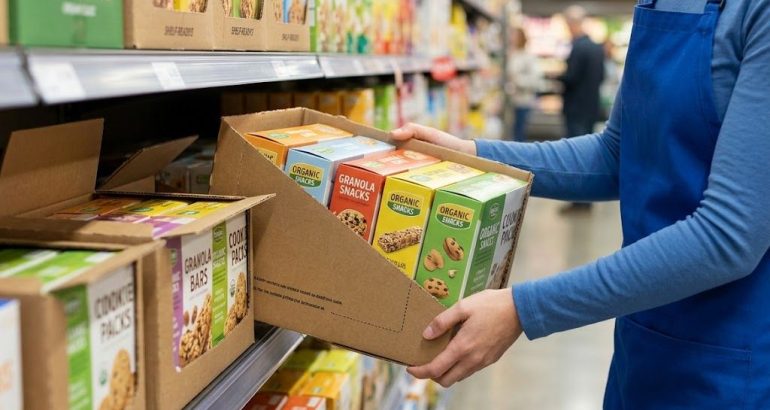
Retailers require packaging that satisfies the industry’s “five easies” standard: easy to identify, open, stock, shop, and dispose of or recycle. We engineer custom printed food packaging around these criteria, reducing manual handling and speeding restocking. Roughly 70% of buying decisions happen in-store where shelf presence directly drives sales.
Why Does Shelf-Ready Packaging Matter Now?
Store shelves decide winners and losers before a shopper ever reads a label. Roughly seventy percent of purchase decisions happen inside the store, meaning packaging carries the weight of the entire sales pitch in the three seconds a shopper’s eyes pass over a shelf. Brands that ignore this reality hand market share to competitors with sharper displays and faster restocking.
Demand for this category is not holding steady; it is accelerating. The global shelf-ready packaging market is projected to grow significantly over the next several years, a trajectory that signals retailers are tightening expectations around retail ready packaging guidelines rather than loosening them. We view this growth as confirmation that packaging decisions now belong in the boardroom, not just the production line.
Is shelf-ready packaging a passing trend or a permanent retail standard?
Retailers have folded these expectations into standard vendor requirements, and that shift shows no sign of reversing. As retail footprints grow and labor budgets shrink, stores lean harder on suppliers to deliver packaging that reduces manual handling.
We built our approach around this shift. With more than five decades of packaging. Display experience, having partnered with Fortune 500 companies, we bring a track record built on the same operational pressures our clients face today:
- Faster restocking cycles that protect labor budgets
- Consistent grocery store display standards across regional chains
- Packaging engineered to hold custom printed food packaging graphics through high-volume handling
What Are the Five Easies Retailers Required?
Retailers grade every shelf-ready submission against five criteria: easy to identify, easy to shop, easy to open, easy to shelve, and easy to recycle. We build our production standards around this checklist because it defines whether a display earns permanent placement or gets sent back to the warehouse. Meeting all five isn’t optional for brands scaling into national grocery chains. It’s the baseline grocery store display standards demand before a case ever touches the sales floor.
Packaging that satisfies these five requirements does more than look good. It cuts down on manual handling at the store level, speeds up restocking during high-traffic hours, and simplifies the shopping experience for the customer standing in the aisle. That combination matters most for CPG brands trying to keep pace with retailer turnaround expectations.
Why do these five factors matter for retail placement?
Store teams operate under tight labor budgets and even tighter reset schedules. Packaging that fails one of the five easies creates friction. A slow unbox, a confusing shelf strip, an awkward-to-recycle case — and friction costs shelf space over time.
How does packaging complexity affect compliance?
As product lines expand and formats multiply, brands lose visibility into which packaging meets retail ready packaging guidelines and which doesn’t. Consistency across SKUs becomes the deciding factor in whether a rollout stays on schedule.
Our approach to custom printed food packaging starts with this five-easies framework, then builds format, graphics, and structural design around it. We offer a wide selection of packaging formats engineered to each brand’s specific shelf requirements. Compliance isn’t an afterthought bolted on after design — it’s built in from the first proof.
What Do Grocery Store Display Standards Demand?
Safety, shelf visibility, and consistency define grocery store display standards at every major retail chain. Buyers reject packaging that looks unfinished or fails compliance checks before it ever reaches a planogram review. Shoppers now expect more than a sealed bag or box.
Customers walking crowded aisles expect custom printed food packaging that feels secure. Looks polished enough to hold its own against dozens of competing brands. That expectation shapes how buyers evaluate new suppliers. A product that photographs well but fails a shelf-stability test never makes it past the first meeting.
We build toward that standard with water-based, odorless inks, engineered for food-safe applications. This approach keeps packaging compliant with regulatory requirements while producing color and finish quality that holds up under store lighting. Compliance and shelf appeal are not competing goals in our process. They’re addressed together, from the first proof to the final print run.
Why does shelf visibility matter so much to buyers?
Retail buyers measure packaging against how quickly it draws a shopper’s eye at the point of sale. We design displays and graphics specifically to capture that attention within seconds. Beverage and food brands live or die by that first glance.
What separates compliant packaging from shelf-ready packaging?
Compliant packaging simply meets safety regulations. Shelf-ready packaging does that and performs visually under fluorescent lighting, at eye level, next to direct competitors. Our approach to retail ready packaging guidelines treats both requirements as inseparable. A package built for one without the other rarely survives a buyer’s first review.
How Should Custom Printed Food Packaging Be Designed?
Effective custom printed food packaging starts with flexographic pre-press precision and disciplined plate manufacturing. These processes lock color and graphic consistency across every print run, batch after batch. Skip that rigor, and a brand risks mismatched hues on the same shelf — a fast way to lose consumer trust.
We build our Pennsylvania operations around this principle. Retail packaging, food packaging, and sustainable packaging each get engineered for a client’s specific product and shelf dimensions, not a generic template. That specificity matters more than most brands realize, until a case ships that doesn’t fit the planogram.
Packaging design also carries financial weight beyond the graphics. We treat every package as a brand touchpoint, an operational tool, and a financial asset. One that directly shapes margins, sustainability goals, and the customer experience at the point of purchase. Design decisions made in pre-press ripple all the way to the register.
What makes packaging design stand out on a crowded shelf?
Custom packaging remains one of the most reliable ways for a food or beverage product to separate itself from competitors. Shoppers scan shelves quickly, and distinctive color, structure, and print quality earn that first glance.
What should CPG teams verify before a print run goes to plate?
We recommend confirming color specifications, structural dimensions, and shelf compatibility before committing to plates. Following clear retail ready packaging guidelines early avoids costly reprints. Keeps products aligned with grocery store display standards once they reach the floor.
Design, in our view, is never decorative alone:
- Color accuracy carried from pre-press through final print
- Structural fit for the intended shelf or display case
- Compliance with retailer-specific placement and labeling expectations
Consistency across these three areas protects both brand image and retailer relationships over time.
What Should Brands Do Before Their Next Launch?
Preparation determines shelf success long before a product reaches the store. Brands that treat packaging as a strategic asset, not a disposable line item, consistently outperform competitors who address it as an afterthought. We build our process around that principle at every stage of a launch.
How does VT Group support a retail launch?
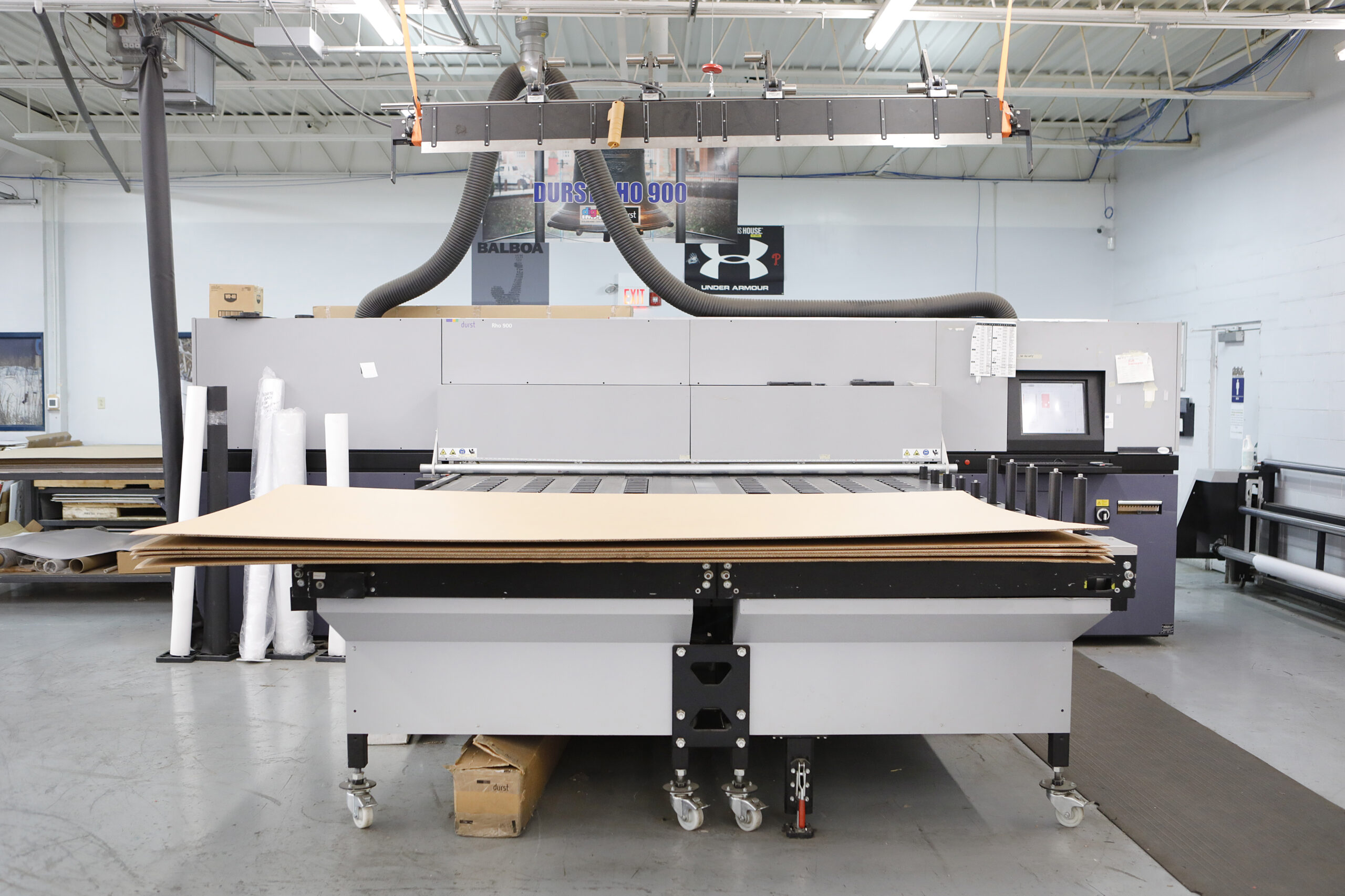
We operate as a full-service suite of companies covering workflow management, pre-press, large format printing, die cutting, and design under one roof. flexographic plate making VT Group LLC is located in Lansdowne, PA, US, and we work directly with brands preparing custom printed food packaging for major retail rollouts. That single-source structure removes the delays that come from coordinating multiple vendors during a time-sensitive launch. Brands ready to start that conversation can reach our team directly. Learn more about our approach to single-source packaging production.
What packaging checks matter most before shipping to retailers?
Retail buyers evaluate packaging against strict operational and visual standards. Before finalizing a launch, we recommend confirming:
- Compliance with retail ready packaging guidelines for opening, shelving, and disposal
- Alignment with grocery store display standards for shelf placement and visibility
- Structural integrity for shipping and repeated handling
- Print consistency across production runs
Shelf-ready formats convert ordinary shipping cartons into ready-to-display units retailers place directly on the selling floor. Skipping this review invites rejected shipments, wasted product runs, and lost placement opportunities at the exact moment brands need retail momentum most. Explore the full scope of what our team offers at vtgroupus.com before your next launch.
Frequently Asked Questions
What are the “five easies” standard retailers require?
Retailers grade shelf-ready submissions on five criteria: easy to identify, easy to shop, easy to open, easy to shelve, and easy to recycle. Meeting all five is the baseline before a case reaches the sales floor.
Why does shelf-ready packaging matter for sales?
Roughly 70% of buying decisions happen in-store. Packaging carries the entire sales pitch during the few seconds a shopper’s eyes pass over the shelf. Strong shelf presence directly drives sales.
How does VT Group approach shelf-ready packaging requirements?
VT Group engineers custom printed food packaging around the five easiest standards, reducing manual handling and speeding restocking. With over five decades of experience, VT Group has partnered with Fortune 500 companies to meet these demands.
Conclusion
Shelf-ready packaging is no longer a differentiator — it’s the entry fee for national retail placement, and the five easies are the scorecard buyers use to decide who earns it. Brands that engineer identification, shopping, opening, shelving, and recyclability into the design from the first proof protect their placement, their labor costs, and their margins. VT Group LLC brings more than five decades of flexographic pre-press, plate making, printing, and die cutting under one roof in Lansdowne, PA, so custom printed food packaging arrives compliant, consistent, and ready for the selling floor. Schedule a consultation with our team before your next launch, and let the shelf do the selling for you.