Introduction: Why Food Packaging Printing Is Under More Scrutiny Than Ever
Food packaging plays a critical role far beyond aesthetics. It protects consumers, preserves product integrity, communicates essential information, and safeguards brand reputation. As food regulations tighten and consumers become more informed, packaging errors are no longer minor inconveniences—they are major business risks.
At the same time, food brands are under pressure to move faster. New product launches, seasonal offerings, private label growth, and short-run promotions demand speed and flexibility that traditional printing methods often struggle to provide.
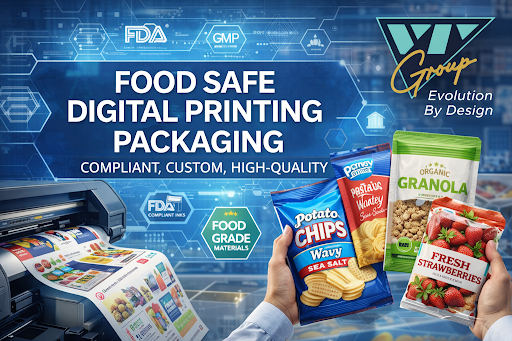
This is where food safe digital printing packaging has become a game-changer. By combining compliance-driven materials and inks with the speed and adaptability of digital printing technology, brands can meet food safety standards without sacrificing quality, creativity, or time to market.
What Is Food Safe Digital Printing Packaging?
Food safe digital printing packaging refers to digitally printed packaging solutions that are manufactured using food-grade materials, inks, coatings, and processes that comply with food safety regulations. These solutions are designed for indirect—and in some cases direct—food contact, depending on the application and regulatory requirements.
Unlike traditional printing methods that rely on plates and long setup times, digital printing allows artwork to be transferred directly to approved substrates. When executed correctly, this process maintains strict control over contamination risks while enabling faster production and greater customization.
Experienced providers such as VT Group integrate food safety considerations into every step of the digital printing workflow, from material selection to quality control.
Why Food Safety Is Non-Negotiable in Packaging Printing
Food packaging is an extension of the food production process. Any failure in packaging safety can lead to contamination, recalls, regulatory action, and lasting damage to brand trust.
Food safe digital printing packaging is designed to prevent:
- Ink migration into food products
- Chemical contamination from non-approved materials
- Odor or taste transfer
- Degradation under heat, light, or moisture
For brands operating in competitive retail environments, especially those producing retail food packaging, compliance is not optional—it’s foundational to doing business.
Digital Printing vs. Traditional Printing for Food Packaging
Traditional methods such as flexography and offset printing have long been used in food packaging, but they are not always ideal for today’s fast-moving food brands.
Key Differences Between Printing Methods
| Feature | Traditional Printing | Food Safe Digital Printing |
| Setup Time | Long and costly | Minimal |
| Short Runs | Inefficient | Highly efficient |
| Customization | Limited | Extensive |
| Waste | Higher | Significantly reduced |
| Speed to Market | Slower | Much faster |
Food safe digital printing packaging allows brands to respond quickly to market demands without committing to excessive inventory or long production timelines.
Food-Grade Materials Used in Digital Packaging
Compliance begins with the substrate. Not all packaging materials are suitable for food contact, and using the wrong substrate can compromise safety regardless of print quality.
Common Food-Safe Packaging Materials
- FDA-compliant paperboard
- Food-grade corrugated materials
- Certified films and liners
- Barrier-coated and laminated substrates
When produced using state-of-the-art equipment, these materials support both food safety and premium visual presentation.
Food Safe Inks, Coatings, and Finishes
Inks and coatings are among the most critical components of food safe digital printing packaging. Approved ink systems are specifically formulated to minimize migration and meet regulatory standards.
Ink and Coating Considerations
- Low-migration ink formulations
- Water-based or approved UV inks
- Protective overprint varnishes
- Controlled curing processes
Precision color management ensures brand colors remain accurate while maintaining compliance across multiple print runs and SKUs.
Regulatory Compliance and Industry Standards
Food packaging printing must comply with a variety of regulations depending on the product and market.
Common Compliance Requirements
- FDA regulations for indirect food contact
- Good Manufacturing Practices (GMP)
- Industry labeling and traceability standards
Digital printing workflows designed for food packaging incorporate compliance checks throughout the production process, reducing risk and ensuring consistency.
Applications of Food Safe Digital Printing Packaging
Retail Food Packaging
Retail shelves are highly competitive, and packaging must balance safety with shelf appeal. Digitally printed cartons, sleeves, and displays allow brands to maintain compliance while standing out visually.
Solutions like product packaging and corrugated display printing benefit from digital printing’s flexibility and speed.
Seasonal and Limited-Edition Packaging
Seasonal flavors, holiday releases, and promotional items often don’t justify large print runs. Food safe digital printing packaging allows brands to produce small batches without sacrificing quality or compliance.
Private Label and Emerging Food Brands
Private label growth and startup food brands rely on digital printing to reduce upfront costs while maintaining professional, compliant packaging. Lower minimums make digital printing accessible without compromising safety.
Speed-to-Market Advantages
Speed is critical in food packaging. Delays can result in missed launch windows, expired inventory, or lost shelf space.
Food safe digital printing packaging supports:
- Faster proofing cycles
- Rapid artwork updates
- On-demand production
- Reduced warehousing costs
Optimized workflows such as workflow perfection ensure speed without sacrificing quality control.
Sustainability Benefits of Digital Printing for Food Packaging
Sustainability is increasingly tied to food safety and consumer trust. Digital printing naturally supports more sustainable practices by reducing waste and overproduction.
Environmental benefits include:
- No printing plates
- Reduced material waste
- Lower energy consumption
- Support for recyclable substrates
These advantages help brands meet sustainability goals while maintaining compliance and quality.
Quality Control and Production Oversight
Food packaging leaves no margin for error. Robust quality control processes are essential to ensure every package meets safety, regulatory, and brand standards.
Providers offering project managers and on-site liaisons add an additional layer of oversight, ensuring food safe digital printing packaging is executed correctly at every stage.
Who Needs Food Safe Digital Printing Packaging?
This solution is ideal for:
- Food manufacturers
- Grocery and specialty retailers
- Beverage brands
- Private label producers
- Emerging and challenger food brands
Any organization producing food packaging with frequent design changes or shorter runs can benefit significantly from digital printing.
Choosing the Right Food Packaging Printing Partner
Not all digital printers are equipped to meet food safety requirements. Compliance depends on both materials and processes.
When selecting a partner, look for:
- Proven food packaging experience
- Compliance-driven workflows
- Advanced digital printing capabilities
- Strong quality assurance protocols
Understanding why choose us helps brands align with partners who prioritize safety, consistency, and long-term success.
The Importance of Experience and Expertise
Food safe digital printing packaging requires more than technology—it requires expertise. Knowledgeable teams understand regulations, material behavior, and risk mitigation.
Working with an experienced team provides confidence that packaging is not only visually appealing but also fully compliant and market-ready.
Frequently Asked Questions About Food Safe Digital Printing Packaging
H3: Is digital printing safe for food packaging?
Yes, when approved materials, inks, and controlled production processes are used.
Can digital printing be used for direct food contact?
Most applications are for indirect food contact. Direct contact requires additional certifications and materials.
Is digital printing cost-effective for food brands?
Digital printing is highly cost-effective for short runs, frequent updates, and fast product launches.
For more answers, visit the frequently asked questions page.
Safe Packaging That Moves as Fast as Your Brand
Food safe digital printing packaging empowers brands to move quickly without compromising safety, compliance, or quality. When executed correctly, it becomes a strategic advantage—not just a production method.
Contact VT Group to explore compliant digital printing solutions designed for today’s food brands.
For more insights on food packaging, printing, and innovation, visit the VT Group blog.